Biochar Compost Benefits: Can Biochar Reduce Gases During Composting?
Biochar Compost Benefits: Can Biochar Reduce Gases During Composting?
The benefits of biochar compost begin long before the finished product reaches your garden. When biochar is added during composting, it can help retain valuable nutrients, support better aeration and influence the gases released as organic materials break down. Once the compost is mature, the biochar also carries stable plant-derived carbon into the soil.
This makes biochar compost particularly interesting for UK gardeners, growers and commercial composters looking for more than a conventional soil improver. By combining organic matter with biochar, it is possible to create a compost that supports soil health while making better use of nutrients during the composting process itself.
So, does biochar actually capture gases during composting? The answer is more nuanced than a simple yes or no. Biochar can adsorb and retain some compounds, but research suggests its wider value comes from changing the physical, chemical and biological conditions inside the compost heap.
What Is Biochar Compost?
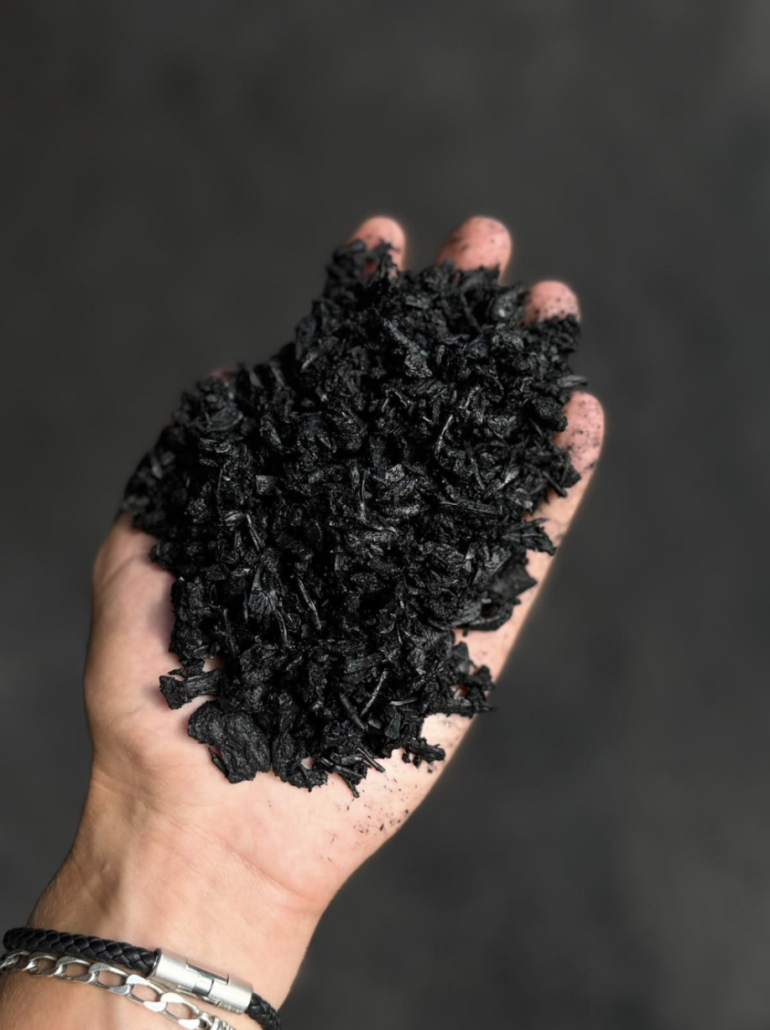
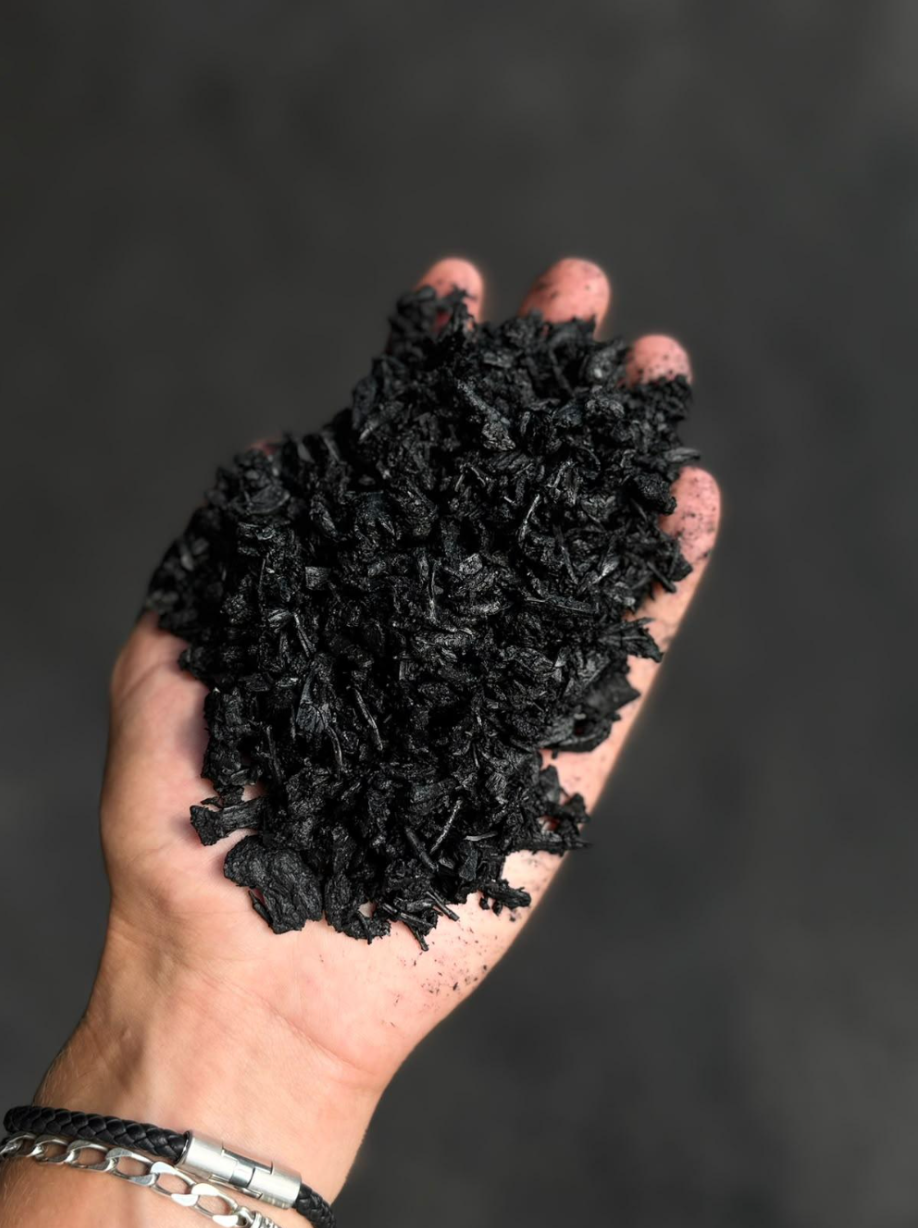
Biochar compost combines mature organic compost with biochar, a stable, carbon-rich material produced by heating biomass in a low-oxygen process known as pyrolysis.
The two materials have complementary properties. Compost provides organic matter, nutrients and biological activity, while biochar provides a highly porous carbon structure that can help retain moisture and nutrients and provide habitat for microorganisms.
When biochar is incorporated during composting, rather than simply mixed into finished compost immediately before use, it spends time interacting with nutrients, moisture and microbial life. This process is often described as activating, charging or inoculating the biochar.
As a result, the finished biochar compost contains both biologically active organic matter and a much more stable form of carbon. This combination helps explain why biochar compost is increasingly used for soil improvement, raised beds, vegetable growing, containers and landscaping.
If you are new to the subject, you can also read SoilFixer’s guide to what biochar is and how it works.
What Gases Are Released During Composting?
A compost heap is full of biological activity. As microorganisms break down organic materials, carbon and nitrogen are transformed into different compounds. Much of this process contributes to producing valuable finished compost, but some nutrients and carbon can also be lost to the atmosphere.
One of the most important losses is ammonia (NH₃). Ammonia emissions represent a loss of nitrogen from the compost and can also contribute to strong odours. Retaining more nitrogen within the composting system can therefore help preserve the nutrient value of the finished material.
Methane (CH₄) is another important gas. It forms primarily in oxygen-poor conditions, which means wet, dense or compacted areas of a compost heap can provide an environment where methane production increases.
Nitrous oxide (N₂O) is associated with microbial transformations of nitrogen and is also an important greenhouse gas. Meanwhile, volatile organic compounds (VOCs) include a broad range of compounds that can contribute to unpleasant composting odours.
Carbon dioxide is different. Carbon dioxide (CO₂) is an expected product of aerobic decomposition, so biochar should not be described as eliminating carbon dioxide emissions from composting. Research shows a much clearer effect on selected gases such as methane, nitrous oxide and ammonia.
How Does Biochar Work During Composting?
The effect of biochar inside a compost heap cannot be explained by one process alone. Instead, several properties of biochar work together to influence the composting environment.
Biochar Can Help Retain Nitrogen
Biochar has a complex internal pore structure and reactive surfaces. Depending on the type of biochar and the conditions inside the compost, these surfaces can interact with ammonium, ammonia and other compounds.
This creates the potential to retain more nitrogen within the compost rather than losing it into the atmosphere. Better nitrogen retention is particularly valuable because nitrogen is an important plant nutrient and contributes to the agronomic value of finished compost.
It is therefore more accurate to describe biochar as helping to reduce gaseous nutrient losses than to say that it simply traps every gas produced during composting.
Biochar Can Improve Compost Aeration
Biochar can also affect the physical structure of compost. Its particles create additional pore spaces within dense organic material, which can help air move through the heap more effectively.
This is important because successful aerobic composting relies on oxygen. If compost becomes excessively wet or compacted, oxygen-poor microsites can develop. These conditions favour methane production and can also contribute to unpleasant smells.
Adding biochar does not remove the need for good compost management. Moisture, feedstock balance, turning and aeration all remain important. However, biochar can support these processes by helping create a more open compost structure.
Biochar Provides Habitat for Microorganisms
The pores and surfaces within biochar also provide spaces that microorganisms can colonise. During composting, the biochar is surrounded by nutrient-rich organic material and diverse microbial communities.
As the compost matures, moisture, nutrients and microorganisms interact with the biochar. By the time the finished material is applied to soil, the biochar has already spent time within a biologically active environment.
This is one reason why co-composted or activated biochar can be particularly useful for soil improvement.
Biochar Adds Stable Carbon to Finished Compost
Another important characteristic of biochar is the stability of its carbon.
The carbon contained in ordinary plant material is relatively easy for microorganisms to break down. Although composting creates more stable organic matter, decomposition continues after compost enters the soil.
Biochar behaves differently because pyrolysis transforms plant-derived carbon into structures that are much more resistant to biological decomposition. When biochar is incorporated into compost and later applied to soil, this stable carbon is carried into the root zone alongside nutrients and organic matter.
This gives biochar compost a longer-term carbon component that conventional compost alone does not provide.
What Does Research Say About Biochar and Composting Emissions?
Scientific research increasingly supports the use of biochar as a composting amendment.
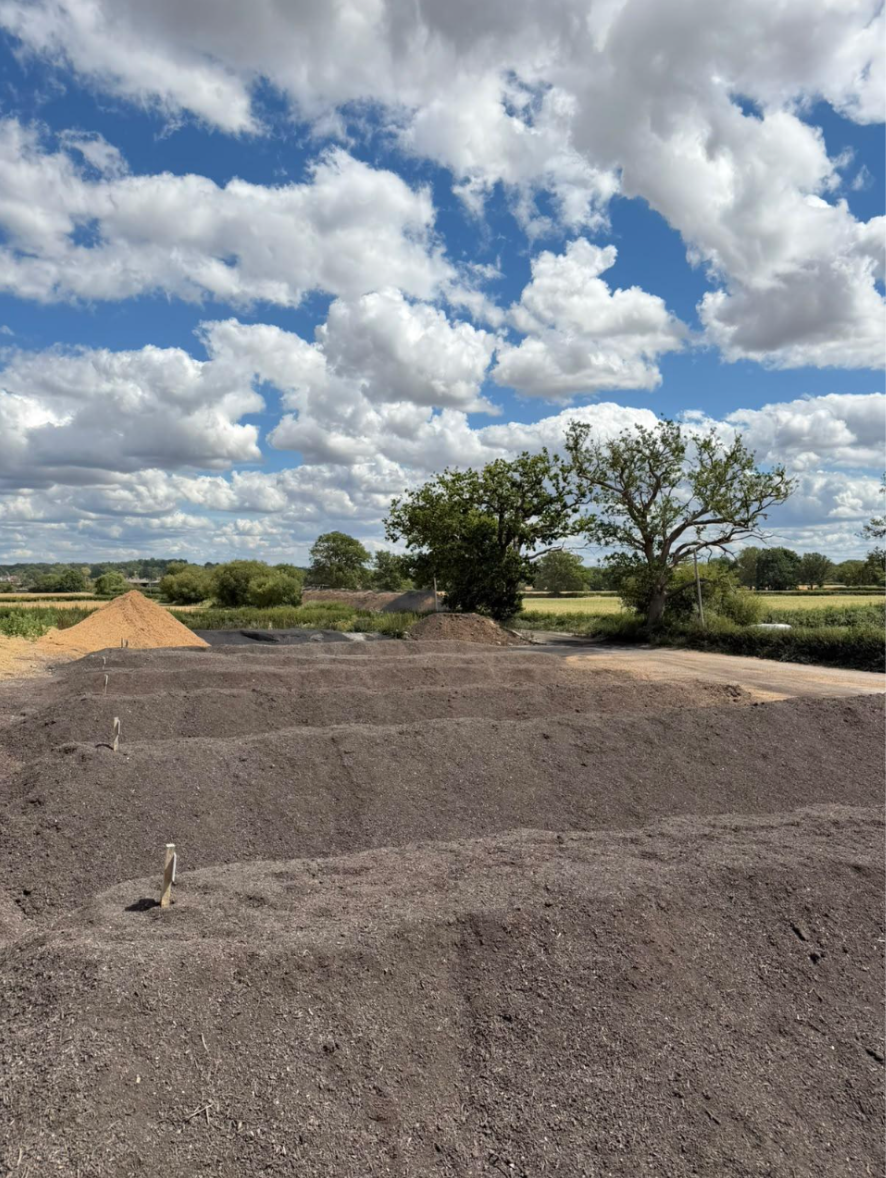
A global meta-analysis published in 2025 examined 123 studies and more than 1,100 observations. Across the studies analysed, adding biochar was associated with average reductions of approximately 53.7% in methane emissions, 49.8% in nitrous oxide emissions and 35.9% in ammonia emissions.
Importantly, the researchers did not find a significant overall reduction in carbon dioxide emissions. The results therefore support a specific claim about reducing selected trace-gas and ammonia emissions rather than suggesting that biochar eliminates all emissions from composting.
Application rate was also an important factor. Biochar properties, compost feedstock, moisture levels and other operating conditions can all influence the outcome. These figures are therefore research averages rather than guaranteed reductions for every compost heap.
You can read the 2025 global meta-analysis on biochar and composting emissions for more detail.
The overall evidence supports a sensible conclusion: biochar can help reduce selected gaseous losses during composting while supporting nutrient retention and adding stable carbon to the finished compost.
Can Biochar Help Reduce Compost Smells?
Biochar may also help with compost odours, although it should not be considered a substitute for managing a compost heap properly.
Strong smells often develop when compost becomes too wet or compacted, when oxygen levels fall, or when ammonia and volatile compounds are released. Because biochar can improve physical structure and interact with some of these compounds, it can support a healthier composting environment.
For home composters, the most important starting point is still a balanced mixture of green and brown materials, suitable moisture and adequate oxygen. Biochar can then be used alongside these fundamentals to improve the composting process.
SoilFixer’s Compost Bulking Agent combines wood fines with biochar to improve airflow, reduce compaction and support microbial activity within the compost heap.
What Are the Main Biochar Compost Benefits for Soil?
The benefits of biochar compost continue once the finished material is incorporated into soil.
Compost contributes organic matter, nutrients and biological activity. Biochar adds a stable and highly porous structure that can help hold water and nutrients within the root zone. Together, these properties create a soil improver designed to support both immediate growing conditions and longer-term soil quality.
For UK gardeners and growers, biochar compost can be particularly useful for improving tired or depleted soils. It can also be incorporated into raised beds, vegetable gardens and other planting areas where organic matter and soil structure need improvement.
The main benefits can include:
- improved soil structure and aeration;
- increased water retention;
- improved nutrient retention;
- additional organic matter;
- habitat for beneficial soil microorganisms;
- stable carbon incorporated into the soil;
- improved conditions within the root zone; and
- an alternative to peat-based growing media when used in a peat-free formulation.
Rather than relying on a single feature, biochar compost brings several aspects of soil improvement together in one material.
Biochar Compost vs Ordinary Compost
Conventional compost remains an excellent material for gardens and growing. It supplies organic matter and nutrients while supporting soil biology.
However, much of the organic material within compost continues to decompose over time. This means its physical and chemical effects gradually change as microorganisms process the material.
Biochar adds a more persistent carbon structure. Its pore network can remain within the soil for much longer, where it continues to interact with moisture, nutrients and microorganisms.
This is why compost and biochar work particularly well together. Compost supplies biologically active organic matter, while biochar adds a stable carbon framework within the soil.
Biochar Compost vs Raw Biochar
Gardeners often ask whether it is better to buy biochar or ready-made biochar compost. Both can be useful, but they suit different situations.
Raw biochar can be added to an existing compost heap or combined with manure and other nutrient-rich organic materials. This allows the biochar to interact with nutrients and moisture before it is incorporated into soil.
You can learn more about this process in SoilFixer’s guide to activating and inoculating biochar.
Ready-made biochar compost provides a more convenient option because the biochar has already been combined with organic material. Gardeners can therefore apply the finished product directly to beds, planting areas or other suitable growing environments.
For someone using biochar for the first time, a prepared biochar compost can be one of the simplest ways to introduce it into the garden.
Which Biochar Compost Should You Buy in the UK?
Choosing the right product depends on whether you need a general-purpose compost or a more concentrated soil improver.
SF40 Biochar Multi-Purpose Compost
SoilFixer SF40 Biochar Multi-Purpose Compost is a peat-free blend containing 20% biochar and 80% sustainable compost.
It is designed as a ready-to-use compost for everyday growing and can be used for containers, raised beds, vegetables and other general garden applications.
For gardeners searching for peat-free biochar compost in the UK, SF40 provides an easy way to introduce both compost and biochar into the growing environment without having to prepare the biochar separately.
SF60 Biochar Super Compost Soil Improver
SoilFixer SF60 Biochar Super Compost is designed more specifically as a concentrated soil improver.
It contains around 20% activated biochar, combined with composted organic materials. Rather than being used simply as conventional potting compost, it can be incorporated into existing soil to improve conditions within the root zone.
This makes SF60 particularly useful for tired beds, vegetable plots, new planting areas and soils where improving organic matter, structure and biological activity is the main objective.
What Should You Look for When Buying Biochar Compost?
Not every biochar product is produced to the same standard. Therefore, it is worth considering more than price when choosing a biochar compost.
The source of the biomass, production process and traceability of the biochar all matter. Independent certification can also provide additional confidence that the material has been produced according to recognised quality and sustainability standards.
SoilFixer’s biochar is produced by its parent company, Brodie Biomass. Brodie Biomass holds European Biochar Certificate (EBC) certification, while SoilFixer products are also Soil Association approved for organic growing.
You can learn more about SoilFixer’s EBC-certified biochar and Soil Association approved products.
For gardeners looking to buy biochar compost in the UK, choosing a traceable and appropriately certified product provides greater confidence about what is actually being added to the soil.
Is Biochar Compost Carbon Negative?
Environmental terminology around biochar needs to be used carefully.
Adding biochar introduces stable plant-derived carbon into compost and soil. Research also suggests that biochar can reduce selected emissions during composting. However, these factors alone do not automatically prove that every finished biochar compost product is carbon negative.
The complete carbon balance also depends on factors such as biomass sourcing, pyrolysis, energy use, transport, compost management and final application. A full carbon-negative claim therefore requires suitable lifecycle assessment and carbon accounting.
Terms such as carbon-storing compost, contains stable biochar carbon and made with certified biochar provide a clearer description when a full lifecycle claim has not been independently assessed.
Can You Add Biochar to Your Own Compost?
Yes. Adding biochar during composting is a practical way to prepare biochar before it reaches the soil.
Instead of leaving biochar as a concentrated dry layer, it should be distributed through the organic material. This gives it greater opportunity to interact with moisture, nutrients and microbial communities as composting progresses.
There is no single application rate suitable for every composting system. The appropriate amount depends on the biochar, compost feedstock, moisture content, particle size and composting conditions.
At SoilFixer, biochar is incorporated into finished compost products such as SF40 and SF60 at around 20%. These ready-made options are useful for gardeners who want the benefits of biochar compost without needing to formulate their own blend.
Why Biochar Compost Matters for Commercial Composters
The benefits are also relevant to larger composting operations.
For commercial composters, biochar has the potential to improve the environmental and agronomic story of finished compost. Research suggests that, under suitable operating conditions, it can support nitrogen retention while reducing selected methane, nitrous oxide and ammonia emissions.
It also introduces stable biochar carbon into the finished material. As demand increases for peat-free growing media, sustainable landscaping materials and soil products with measurable environmental benefits, this creates opportunities for differentiated biochar-compost products.
However, good composting management remains essential. Biochar should be treated as an additional tool within a well-managed composting system rather than a solution for poor aeration, excessive moisture or unsuitable feedstock.
Commercial composters, landscapers and growers interested in larger quantities of biochar can contact SoilFixer to discuss requirements and suitable applications.
The SoilFixer Approach to Biochar Compost
At SoilFixer, we believe biochar and compost work particularly well together because they contribute different properties to the finished soil improver.
Our products combine organic material with high-quality biochar to bring together nutrients, organic matter, microbial habitat and stable carbon. Products such as SF40 and SF60 contain around 20% biochar, allowing gardeners and growers to introduce a meaningful quantity of biochar while also adding biologically active organic material.
This approach creates practical products for people who want to improve soil without needing to source, activate and blend biochar themselves.
For UK gardeners, growers, landscapers and commercial users, it also provides access to British-produced biochar backed by recognised certification.
Buy Biochar Compost in the UK
If you are looking to buy biochar compost in the UK, the right SoilFixer product depends on how you intend to use it.
Choose SF40 Biochar Multi-Purpose Compost if you want a ready-to-use, peat-free compost containing 20% biochar for general gardening, raised beds, containers and growing.
Choose SF60 Biochar Super Compost if your main objective is to improve existing soil by adding activated biochar, organic matter and composted material to the root zone.
Alternatively, gardeners who already make their own compost can explore SoilFixer’s biochar products or use the Compost Bulking Agent to introduce biochar during composting.
Whether you are improving a vegetable bed, restoring tired garden soil or producing compost at a larger scale, combining biochar with compost provides a practical way to bring together nutrient-rich organic matter and stable carbon.
Frequently Asked Questions About Biochar Compost
What are the main benefits of biochar compost?
Biochar compost combines the benefits of mature compost with the stable, porous structure of biochar. It can add organic matter, support nutrient and water retention, improve soil structure and introduce stable carbon into the root zone.
Is biochar good for compost?
Research suggests that biochar can be a useful composting amendment. It may improve aeration, support nitrogen retention and reduce selected methane, nitrous oxide and ammonia emissions under suitable conditions.
Does biochar stop compost from smelling?
Biochar can support odour management by improving compost structure and interacting with ammonia and selected volatile compounds. However, good aeration, suitable moisture and a balanced compost mixture remain essential.
Can I put biochar directly into my compost bin?
Yes. Adding biochar during composting allows it to interact with nutrients, moisture and microorganisms before the finished compost is applied to soil.
Is biochar compost peat-free?
Biochar itself is not peat, but whether a finished compost is peat-free depends on the other ingredients in the blend. SoilFixer SF40 Biochar Multi-Purpose Compost is a peat-free formulation.
Where can I buy biochar compost in the UK?
SoilFixer supplies UK biochar products including SF40 Biochar Multi-Purpose Compost and SF60 Biochar Super Compost Soil Improver. Products can be ordered directly through the SoilFixer website, with options available for home gardeners and larger applications.
 https://www.groupen.it/biochar-viticulture-improving-soil/