Can Biochar Improve Vineyard Soil and Climate Resilience?
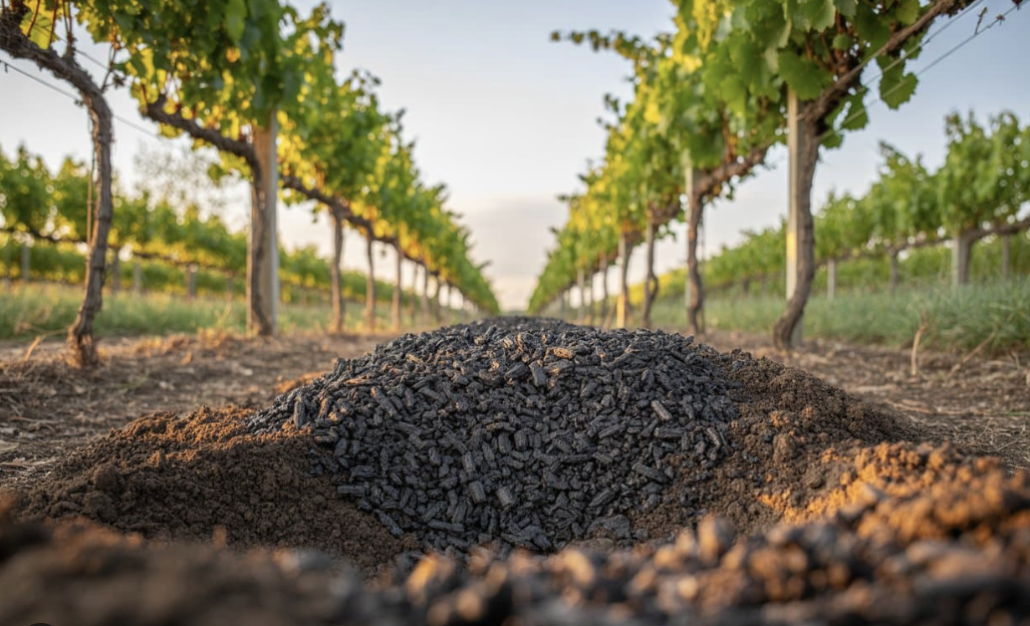 https://www.groupen.it/biochar-viticulture-improving-soil/
Can Biochar Improve Vineyard Soil and Climate Resilience?
When most people think about vineyards, they think about grapes, climate and wine. However, every successful vineyard begins with healthy soil.
Vineyard soil supports root development, stores water, retains nutrients and helps vines cope with environmental stress. This is becoming increasingly important as wine-growing regions experience longer dry periods, higher temperatures, heavier rainfall and growing pressure on valuable topsoil.
Biochar for soil is attracting increasing interest as a way to improve soil structure, retain moisture and support long-term soil health. Although biochar is often discussed as a carbon-storage material, its immediate value to vineyards may lie in its ability to improve water management, reduce soil erosion and create more resilient growing conditions.
Why Vineyard Soil Health Matters
Vineyards are frequently established on sloping land. While slopes can provide favourable sunlight, drainage and growing conditions, they can also leave vineyard soils vulnerable to surface runoff and erosion.
During intense rainfall, water can move quickly across exposed ground, carrying away fine soil particles, organic matter and nutrients. During prolonged dry periods, soils with poor structure or low organic matter may struggle to retain enough moisture to support vines.
The loss of topsoil is not simply a short-term agricultural inconvenience. Topsoil develops slowly and plays a central role in:
- Water storage
- Nutrient cycling
- Root development
- Soil biological activity
- Vineyard productivity
- Resistance to drought and erosion
As soil quality declines, vineyards may become increasingly dependent on irrigation, fertilisers and other external inputs.
Building vineyard resilience therefore means improving the soil’s ability to perform under both extremes: absorbing water during heavy rainfall and retaining moisture during dry conditions.
What Is Biochar and What Does It Do to Soil?
Biochar is a porous, carbon-rich material created by heating biomass in a low-oxygen process known as pyrolysis.
The process converts part of the carbon contained in wood or other plant material into a stable form. When suitable biochar is incorporated into soil, its internal pore structure can influence water storage, nutrient retention, aeration and microbial habitat.
Biochar is not a conventional fertiliser. Instead, it acts as a long-lasting soil amendment that can improve the physical, chemical and biological environment around plant roots.
Potential benefits of adding biochar to soil include:
- Improved soil water retention
- Better nutrient retention
- Reduced nutrient leaching
- Improved drainage and aeration
- Greater habitat for beneficial soil microorganisms
- Improved soil aggregation and structure
- Reduced soil compaction
- Long-term storage of stable carbon
The results will depend on the original soil type, existing pH, biochar feedstock, production method, application rate and local growing conditions.
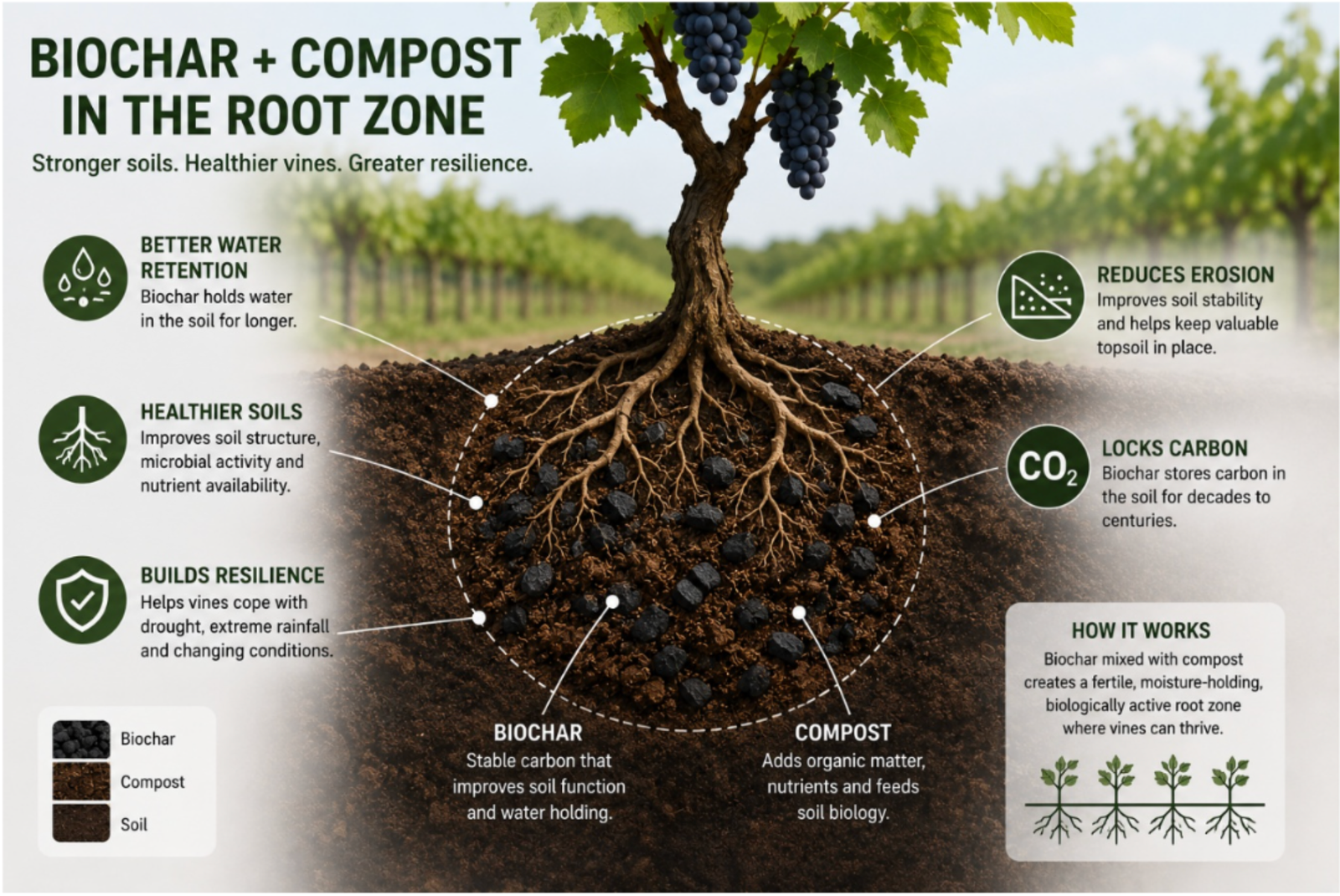
How Can Biochar Improve Vineyard Soil?
Biochar May Help Reduce Vineyard Soil Erosion
One of the most promising potential benefits of biochar for vineyard soil is its ability to reduce soil loss during rainfall.
A study examining Mediterranean vineyard soil found that the erosion rate in biochar-amended soil was approximately three times lower than in untreated soil.
The study reported:
- A 67% reduction in coarse-fragment erosion
- A 43% reduction in fine-earth erosion
- A 34% reduction in splash erosion
- A 28% improvement in water infiltration
- A 7% reduction in soil bulk density
The researchers concluded that biochar improved the soil’s sponge function and helped mitigate water erosion.
Read the full research paper: Soil conservation benefits of biochar in Mediterranean vineyards.
For vineyards located on slopes or in areas experiencing intense rainfall, these effects could help protect valuable topsoil and reduce the movement of sediment, organic matter and nutrients away from the site.
Biochar should not replace established erosion-control practices such as cover cropping, mulching, contour management and reduced soil disturbance. However, it may complement these methods as part of a wider vineyard soil-management strategy.
Biochar May Improve Soil Water Retention
Water availability is becoming one of the most significant challenges facing vineyards and other agricultural soils.
In the Mediterranean vineyard study, biochar-amended soil stored an average of 73% more water than untreated soil. During particularly dry periods, the treated soil stored between 171% and 303% more water.
These figures should not be treated as guaranteed results for every vineyard. They were recorded under specific experimental conditions using a particular soil, biochar and application method.
Nevertheless, the findings demonstrate the potential for biochar to improve water retention in soil.
Biochar contains an extensive network of pores. When it is correctly incorporated and conditioned, these pores can hold moisture and help slow the rate at which soil dries after rainfall or irrigation.
This may be particularly useful in:
- Sandy or free-draining soils
- Vineyards exposed to prolonged dry weather
- Areas with restricted irrigation
- Sloping land affected by rapid runoff
- Degraded soils with low organic matter
- Newly planted vineyard rows
Biochar cannot eliminate the need for irrigation in every vineyard. It may, however, help soil make more efficient use of available rainfall and irrigation water.
Biochar Can Support Long-Term Soil Improvement
Biochar remains in soil for much longer than ordinary compost or fresh organic matter.
A long-term study in a Tuscan vineyard found that measurable changes remained present ten years after biochar application. The biochar-amended soil had higher organic matter, nutrient content and water availability, together with lower soil bulk density.
The researchers also observed changes in vine-root development that suggested water and nutrients were more readily available within the amended soil.
Read the open-access research: The long-term effect of biochar application to Vitis vinifera.
These findings are important for vineyards because grapevines are perennial crops. The value of a soil amendment should not be judged solely by what happens during the first growing season.
The more important question may be whether the amendment helps protect soil condition and vineyard productivity over many years.
Biochar May Improve Nutrient Retention
Biochar’s porous structure and surface chemistry can help retain certain nutrients within the soil.
This may reduce the speed at which nutrients are lost through runoff or leaching and help keep them within the vine’s root zone. The pore structure can also provide habitat for beneficial bacteria, fungi and other soil organisms involved in nutrient cycling.
However, untreated biochar may initially absorb nutrients from the surrounding soil before its pores become conditioned.
For this reason, biochar is often activated by:
- Mixing it with mature compost
- Adding it during the composting process
- Soaking it in a nutrient-rich solution
- Blending it with manure or other organic material
You can learn more in SoilFixer’s guide to activated biochar for soil health.
For growers seeking a ready-to-use product, activated biochar compost may be more appropriate than applying untreated biochar directly around established plants.
Biochar or Biochar Compost: Which Is Best for Soil?
Biochar and biochar compost serve related but slightly different purposes.
Biochar Granules
Pure biochar granules provide stable carbon and long-lasting pore structure. They may be suitable for incorporation during vineyard establishment, soil renovation, agricultural projects or larger soil-improvement programmes.
Raw biochar should normally be activated or blended with compost or another nutrient source before it is added to planted soil.
SoilFixer’s biochar granules for soil improvement are produced in the UK and are available in different quantities.
For large vineyard, agricultural or landscaping requirements, SoilFixer can also discuss bulk biochar orders.
SF60 Biochar Soil Improver
SF60 Biochar Super Compost is a ready-to-use soil improver containing activated biochar, composted manure and fine wood compost.
It is designed to improve:
- Soil structure
- Water retention
- Nutrient availability
- Root-zone biology
- Beneficial fungal activity
- Tired or depleted soil
Because the biochar is already blended with nutrient-rich organic material, SF60 can begin supporting the soil without the same conditioning period required by untreated biochar.
SF40 Biochar Compost
SF40 Biochar Multi-Purpose Compost is a peat-free blend containing biochar and sustainable compost.
It is intended for applications including:
- Containers
- Raised beds
- Planting areas
- Potting
- General soil improvement
- Topsoil enhancement
For small-scale growing, vineyard nurseries, propagation or planting projects, a ready-to-use biochar compost may provide a practical introduction to the benefits of biochar.
Does Biochar Increase Grape Yield?
Biochar does not automatically produce more grapes, and it cannot guarantee better wine.
A four-year field experiment in Tuscany reported higher grape yields in biochar-treated plots during each harvest year included in the study. The increase compared with untreated plots ranged from approximately 16% to 66%, with the greatest differences recorded during lower-rainfall years.
The researchers did not identify significant detrimental effects on the main grape-quality indicators assessed.
Read the research paper: Biochar increases vineyard productivity without affecting grape quality.
However, other studies have produced more limited results.
Research at two Oregon vineyards found that biochar increased soil water content and the availability of carbon, nitrogen and several nutrients. However, the researchers did not observe an immediate increase in vine productivity during the initial study period.
A study involving a low-organic-carbon vineyard soil in Switzerland also found that biochar and biochar-compost did not automatically produce significant improvements in vine growth or grape quality under the conditions examined.
View the research record: Biochar and biochar-compost as vineyard soil amendments.
These mixed findings demonstrate that biochar performance depends on the interaction between:
- Soil type
- Soil pH
- Existing organic matter
- Climate
- Vine variety
- Water availability
- Biochar quality
- Application rate
- Incorporation method
The primary purpose of biochar does not always need to be increasing yield. In many vineyards, its greater value may be protecting soil condition, improving water management and maintaining existing productivity during increasingly unpredictable growing conditions.
Is Biochar Suitable for Every Type of Soil?
Biochar is not a universal solution and should not be applied without first understanding the existing soil.
Before using biochar in vineyard or agricultural soil, growers should assess:
- Soil texture
- Soil structure
- Organic-matter content
- Existing pH
- Nutrient availability
- Drainage
- Compaction
- Erosion risk
- Irrigation availability
- Rooting depth
- The objective of the application
Biochar can raise soil pH. This may benefit acidic soil but could be undesirable in soil that is already alkaline.
Its effect on water retention may also differ between soil types. Sandy and free-draining soils may respond differently from clay-rich soils.
The Royal Horticultural Society notes that reported effects of biochar include improved water and nutrient retention, particularly in sandy soil, together with improved drainage, aeration and habitat for beneficial soil microbes. It also advises considering the pH of the biochar and the receiving soil.
Read the RHS guidance on biochar and soil.
A soil analysis and a clearly defined objective should therefore come before large-scale application.
For commercial vineyards, farms and land-restoration projects, a controlled trial is often the most responsible starting point. Treated and untreated areas can then be compared for:
- Soil moisture
- Water infiltration
- Soil structure
- Vine response
- Nutrient availability
- Yield
- Fruit-quality indicators
Application rates used in published studies should not automatically be copied because the appropriate rate will depend on the soil, product and intended outcome.
Biochar for Sustainable Vineyard Management
Biochar cannot solve every challenge facing modern viticulture.
It should be considered alongside good vineyard-management practices such as:
- Cover cropping
- Compost application
- Reduced soil disturbance
- Mulching
- Erosion control
- Organic-matter management
- Carefully planned irrigation
- Regular soil testing
When appropriately selected and applied, biochar may contribute to:
- Healthier vineyard soil
- Reduced soil erosion
- Lower surface runoff
- Improved water infiltration
- Greater soil water retention
- Better nutrient retention
- Improved soil structure
- Increased soil biological activity
- Long-term carbon storage
- Greater resilience to drought and heavy rainfall
Where Can You Buy Biochar for Soil in the UK?
SoilFixer produces UK-made biochar and biochar-compost products for gardens, growing projects, landscaping, agriculture and wider soil-improvement applications.
Depending on the project, suitable options may include:
- Buy biochar granules for soil improvement
- Buy SF60 biochar soil improver
- Buy SF40 peat-free biochar compost
For vineyards, farms, estates, landscaping projects or larger commercial requirements, contact SoilFixer for bulk biochar and biochar-compost enquiries.
Can Biochar Help Vineyards Become More Resilient?
Current research suggests that biochar can support more resilient vineyard soil, particularly where land is vulnerable to erosion, low organic matter, rapid drainage or water stress.
It should not be viewed simply as a way to produce more grapes. Its strategic value may lie in helping vineyards protect their soil, retain more water and maintain productivity during increasingly unpredictable conditions.
The wine industry has always been shaped by its relationship with the land. As environmental pressures increase, practices that protect soil health and support long-term resilience will become increasingly valuable.
At SoilFixer, we believe high-quality biochar and biochar compost can form part of that solution.
Ready to improve your soil? Explore SoilFixer’s UK biochar and biochar-compost products or contact our team about a commercial or bulk order.
Frequently Asked Questions
What does biochar do to soil?
Biochar can improve water and nutrient retention, soil structure, aeration and microbial habitat. Its effects depend on the biochar properties and the existing soil.
Is biochar good for vineyard soil?
Biochar may benefit vineyard soil by reducing erosion, increasing water storage and supporting long-term soil health. Soil analysis and small-scale trials are recommended before wider application.
Is biochar good for sandy soil?
Biochar may be particularly useful in sandy or free-draining soil because its pore structure can help retain water and nutrients that might otherwise drain away quickly.
Is biochar good for clay soil?
Biochar may help improve aggregation, aeration and structure in some clay soils. Results depend on the biochar particle size, application rate and existing soil condition.
Should biochar be mixed with compost?
Mixing or composting biochar with nutrient-rich organic matter can activate it before application. This introduces moisture, nutrients and biological activity into the biochar’s pore structure.
What is biochar compost?
Biochar compost is a blend of biochar and compost. It combines the nutrients and organic matter supplied by compost with the persistent pore structure and carbon supplied by biochar.
How do you apply biochar to soil?
Biochar can be mixed with compost, activated with a nutrient solution and incorporated into the root zone. The correct application method and rate will depend on the soil and planting situation.
Where can I buy biochar in the UK?
SoilFixer supplies UK-made biochar granules, biochar soil improver and peat-free biochar compost through its online shop. Bulk quantities are available by contacting SoilFixer directly.
 https://www.meristemdesign.co.uk/case-study/fillebrook-road/